

Stepcharge
₹4,000.00
Our project presents a low-cost prototype of piezoelectric tiles that generate electricity from human footsteps. When a person walks on the tile, embedded piezoelectric sensors convert mechanical pressure into electrical energy.
This prototype demonstrates how daily foot traffic in places like schools, corridors, malls, and sidewalks can be used to produce clean and renewable energy, promoting smart, eco-friendly energy harvesting solutions.
Description
Our project focuses on the design and demonstration of a low-cost, cost-efficient Piezoelectric Footstep Power Generation System, developed as a small-scale functional product prototype inspired by real-world implementations such as those used in Japan. The main objective of this innovation is to make footstep-based energy generation affordable, scalable, and practical, especially for large-scale deployment in public spaces.
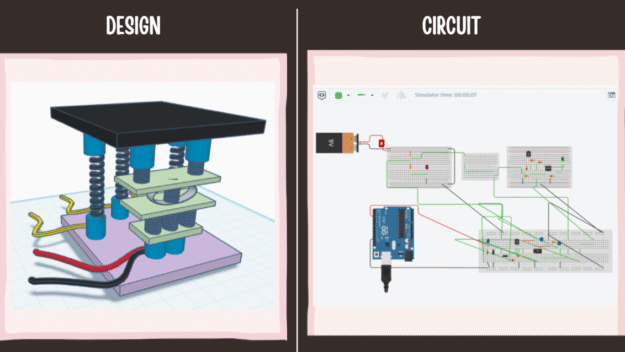
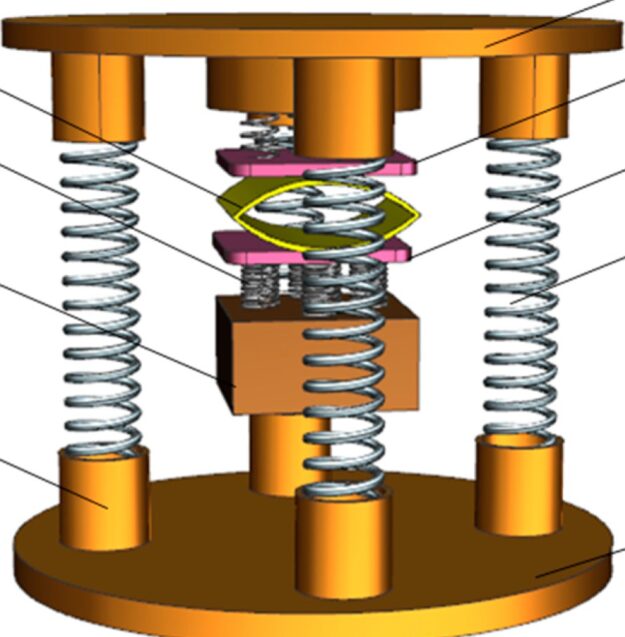
The system works on the principle of piezoelectricity, where certain materials generate electrical energy when mechanical pressure is applied. In this prototype, multiple low-cost piezoelectric (PZT) sensors are arranged beneath a modular flooring tile. When a person walks or steps on the tile, the applied pressure causes slight deformation of the sensors, generating electrical energy. This energy is passed through a simple and economical bridge rectifier circuit to convert AC into DC and is then stored in a capacitor or rechargeable battery for later use.
The prototype demonstrates how high-footfall areas such as government schools, railway stations, metro platforms, shopping malls, footpaths, and parks can generate useful energy from routine human movement. Although the electricity generated by a single tile is small, the system is modular, scalable, and budget-friendly. By connecting multiple low-cost tiles, sufficient energy can be produced to power LED lighting, sensors, digital display boards, or emergency charging points without requiring a high initial investment.
This project promotes renewable, clean, and sustainable energy by utilizing human footsteps—an energy source that is normally wasted. The innovation highlights that green technology does not need to be expensive, making it suitable for smart city initiatives, government infrastructure, and educational institutions.
Future Scope and Improvements
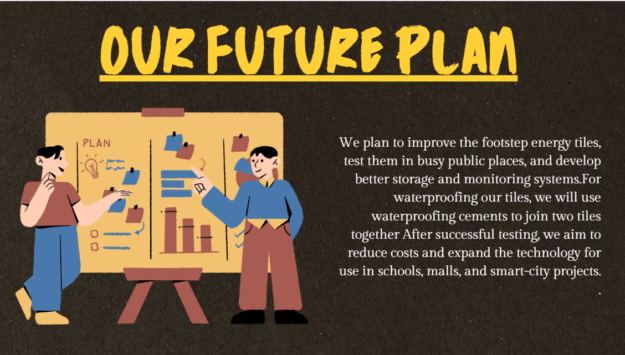
In the future, this system can be further improved and expanded by:
-
Increasing the number of tiles to enhance total power output
-
Using higher-efficiency piezoelectric materials as technology advances
-
Integrating smart controllers and energy management systems
-
Connecting the system to street lighting or smart city grids
-
Improving tile durability for long-term public use
-
Adding real-time energy monitoring displays for public awareness
With government support and continued development, this low-cost prototype can be upgraded into a commercially viable and large-scale renewable energy solution for public infrastructure.
This project demonstrates how a simple, low-cost innovation can be scaled and improved in the future to support sustainable and smart city development.
The proposed budget of ₹4,000 is required to develop an improved and more reliable prototype of the piezoelectric footstep power generation system. The additional amount above ₹2,000 will be used to increase the number of piezoelectric sensors, improve tile strength and durability, enhance energy storage capacity, and support proper testing and safety measures. This higher budget ensures better performance, longer lifespan, and a more realistic demonstration suitable for future scaling and government-level applications.
The higher budget is required to improve durability, increase sensor count, and enhance energy storage for a more reliable and scalable prototype




 MOBTOP